|
|
|
Dear Neighbors,
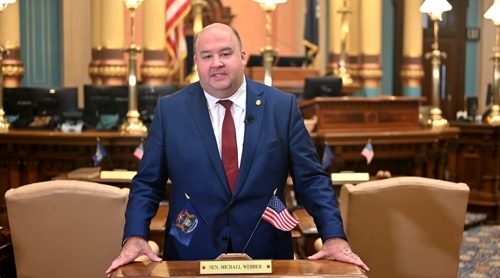
Welcome to this month’s edition of my e-newsletter. I will continue to work with my colleagues on both sides of the aisle to tackle the tough issues that will help lower the cost of living, help families get ahead, and build a brighter future for all who call Michigan home.
As always, I welcome your feedback on the issues facing Michigan or the Greater Rochester Area, Troy, Sterling Heights, Utica and Shelby Township communities. Constituent feedback is vital as I represent our communities in Lansing. If you are experiencing a problem with one of our state government agencies, my office is always available to assist with finding a solution. I respect your opinion and will always do my best to make myself available and accessible to you.
Please take a moment to visit my website, like my official Facebook page, send me an email or call my office at 517-373-0994. If you have any questions, concerns or opinions on what is happening, please do not hesitate to contact me.
Sincerely,
|
|
|
|
|
|
|
Michael Webber
State Senator
9th District
|
|
|
|
|
|
Webber honored by Mental Health America
|
|
|
|
|
|
|
I was recognized by Mental Health America as one of the 2025 State Legislative Champion awardees for my continued advocacy and promotion of policies that strengthen behavioral health systems, expand prevention and treatment resources, reduce barriers to care, and improve the lives of people living with mental health and substance use conditions. I have made improving care and demanding accountability within Michigan’s mental health care systems a priority.
I have spent a great deal of time over the past few years listening to patients and families of those who entrusted the state to take care of their loved ones, and unfortunately, these stories evoked heartbreak and disappointment. The further we look into the state’s mental health care system, particularly at the Hawthorn Center, Walter Reuther Psychiatric Hospital and other state-run facilities, the worse it gets. The tragic testimonies highlight the tremendous need for strong reforms and even stronger advocacy on behalf of patients and their families across Michigan. I am committed to working to right these wrongs and am thankful that Mental Health America recognized and highlighted these efforts on a national level.
|
|
|
|
|
|
Webber, Fitzgerald op-ed in The Detroit News: Restore autism support funding for Michigan families
|
|
|
|
|
|
|
Everyone in Michigan is touched by autism. At first glance, that might appear to be an overstatement, but with a condition that impacts one in 31 children, it is virtually guaranteed that everyone knows someone, or has interacted with someone, who has autism spectrum disorder.
Autism, a neurodevelopmental disorder characterized by difficulties in social interaction, communication and repetitive behaviors that can range from mild to severe, is truly a spectrum that can look very different from one person to another. Yet, it is a lifelong diagnosis that impacts individuals of every race, religion and culture. Autism knows no political or social bounds. And it’s not a partisan issue. Not now, not ever.
Since 2015, both Republican and Democratic legislative majorities, in concert with the governor, have worked together to help fund the MiNavigator program, operated by the nonprofit Autism Alliance of Michigan (AAoM) through a Michigan Department of Health and Human Services (MDHHS) grant.
AAoM was founded in 2009 out of a need to address significant service and reimbursement barriers for those with autism and their families. Within three years, AAoM was successful in its advocacy efforts and, as a result, saw laws passed that mandated state-regulated health insurance companies to provide coverage for the diagnosis and treatment of autism for children up to age 18. After the legislation was passed in 2012, the MiNavigator program was created to help families navigate our state’s complex systems of care.
Each year, MiNavigator supports about 4,000 families through professional consultation and case management, helping everyone from young families asking where they can go to have their child evaluated for autism to older families looking for housing options for their dependent adult children. MiNavigator comes at no cost to families and connects them to a team of professionals with backgrounds in clinical services, education, vocational rehabilitation and lived autism experience to help identify resources as they navigate what is often an overwhelming and ever-changing lifelong journey.
MiNavigator was staffed by a professional team of eight navigators, five specialists and three outreach coordinators to serve the entire state — until the MDHHS grant that supported the program was eliminated in the most recent state budget. The budget cut has resulted in the layoffs of 18 AAoM staff members, meaning fewer Michigan families will have access to this important service and those that do are now facing significant delays.
Cutting $2 million from MiNavigator is not just a line-item reduction — it’s a direct blow to thousands of Michigan families who depend on these programs every day.
For parents raising a child with autism, access to early answers, navigation services and specialized supports can mean the difference between stability and crisis. Annually, MiNavigator helps up to 4,000 families find care, coordinate therapies and access education and community resources — services that are already stretched thin across our state. Without adequate funding, more parents will be forced to leave the workforce, more children will go without vital therapies and more families will be left to navigate an already complex system on their own.
For many of us, this is personal.
Along with the other members of the bipartisan Michigan Autism Advocates Caucus, we will continue to call upon our legislative colleagues and the governor to restore the $2 million in funding for MiNavigator in 2026 and to renew this valuable service in future budgets.
We must make sure Michigan families who are working hard to support their children and loved ones living with autism spectrum disorder are not left behind by the state.
State Sen. Michael Webber, R-Rochester Hills, and state Rep. John Fitzgerald, D-Wyoming, serve as co-chairs of the bipartisan Michigan Autism Advocates Caucus. This guest commentary was published in the Nov. 24, 2025 edition of The Detroit News.
|
|
|
|
|
|
Senate passes expansion of Transformational Brownfield Redevelopment Program
|
|
|
|
|
|
|
Economic development has been a priority in the Legislature as we continue working to make Michigan a state where businesses want to invest. The Senate approved Senate Bill 723, which would extend the sunset on the state’s Transformational Brownfield Program and approval limits, and increase tax capture caps. These changes are needed in our district to support the transformation of Lakeside Mall on Hall Road and other large projects to come.
Transformational brownfield plans allow developers to capture a portion of specific incremental taxes generated from large-scale redevelopments of brownfield sites for a specified period. The program encourages companies to redevelop property that has been polluted due to previous industrial or commercial use and makes such large-scale projects more economically feasible.
Brownfield land is a blight on many of our local communities and often poses health risks to nearby residents due to chemical or other pollution. Since the program’s enactment, the Michigan Strategic Fund (MSF) has approved more than 20 projects for tax capture for brownfield redevelopment, revitalizing sites across the state and bringing new economic opportunity to Michigan.
Nearly all of the $1.6 billion cap on funding has already been approved, putting future large-scale brownfield redevelopment at risk. The bill increases the cap to $3.5 billion and allows the MSF to approve projects after 2027.
Additionally, the bill would create new safe harbor accounting requirements for projects that receive Transformational Brownfield Plan approval, creating new guardrails against fraud. Large proposed projects would be subject to an independent fiscal analysis for the state, ensuring they will have a positive economic impact for Michigan before approval.
Finally, SB 723 would allow the MSF to approve 25% more tax capture than previously allowed, but would redirect this funding from the developer to the Michigan Housing and Community Development Fund, child care programs that improve access to affordable child care, and programs related to small businesses and placemaking. These provisions would expand the positive impact of brownfield redevelopment to address housing shortages and the affordability crisis.
I am proud to have voted YES on SB 723 as it was passed with bipartisan support in the Senate. It is now before the House Committee on Economic Competitiveness for further review.
|
|
|
|
|
|
Rochester Area Hometown Christmas Parade
|
|
|
|
|
|
|
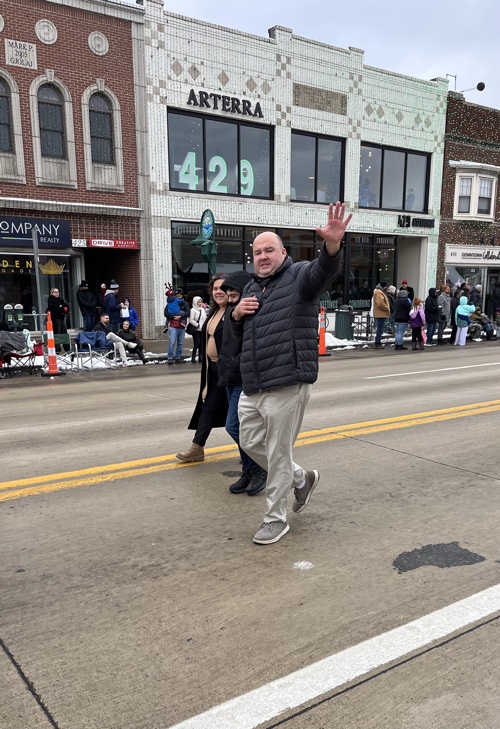
I joined my family, other elected officials, community leaders and more than 100 local groups and organizations to walk in the Rochester Area Hometown Christmas Parade. The parade is a holiday tradition in the Greater Rochester Area and surrounding communities and is the largest Christmas parade in Michigan.
It was great to see so many of my constituents lining Main Street in downtown Rochester to see the marchers, floats, bands and drill teams. We were blessed with excellent weather, and thousands of people turned out for one of our community’s most memorable family events.
|
|
|
|
|
|
|
No appointment is necessary to attend. The 9th Senate District includes the cities of Rochester, Rochester Hills, Troy and Utica, along with parts of Oakland Township, Shelby Township and Sterling Heights.
|
|
|
|
|
|
|
Senator Michael Webber
3200 Connie B. Binsfeld Office Building
P.O. Box 30036
Lansing, MI 48909-7536
Visit my website at: SenatorMichaelWebber.com
|
|
|
|
|
|