|
|
|
Dear Neighbors,
Welcome to this month’s edition of my e-newsletter. I will continue working with my colleagues on both sides of the aisle to tackle the tough issues that will lower the cost of living, help families get ahead and build a brighter future for all who call Michigan home.
As always, I welcome your feedback on issues facing Michigan or the Greater Rochester Area, Troy, Sterling Heights, Shelby Township and Utica communities. Constituent feedback is vital as I represent our communities in Lansing. If you are experiencing a problem with one of our state government agencies, my office is always available to assist with finding a solution. I respect your opinion and will always do my best to make myself available and accessible to you.
Please take a moment to visit my website, like my official Facebook page, send me an email or call my office at 517-373-0994. If you have any questions, concerns or opinions on what is happening, please do not hesitate to contact me.
Sincerely,
|
|
|
|
|
|
|
Michael Webber
State Senator
9th District
|
|
|
|
|
|
Sen. Webber presses MDHHS for evidence of corrective actions
|
|
|
|
|
|
|
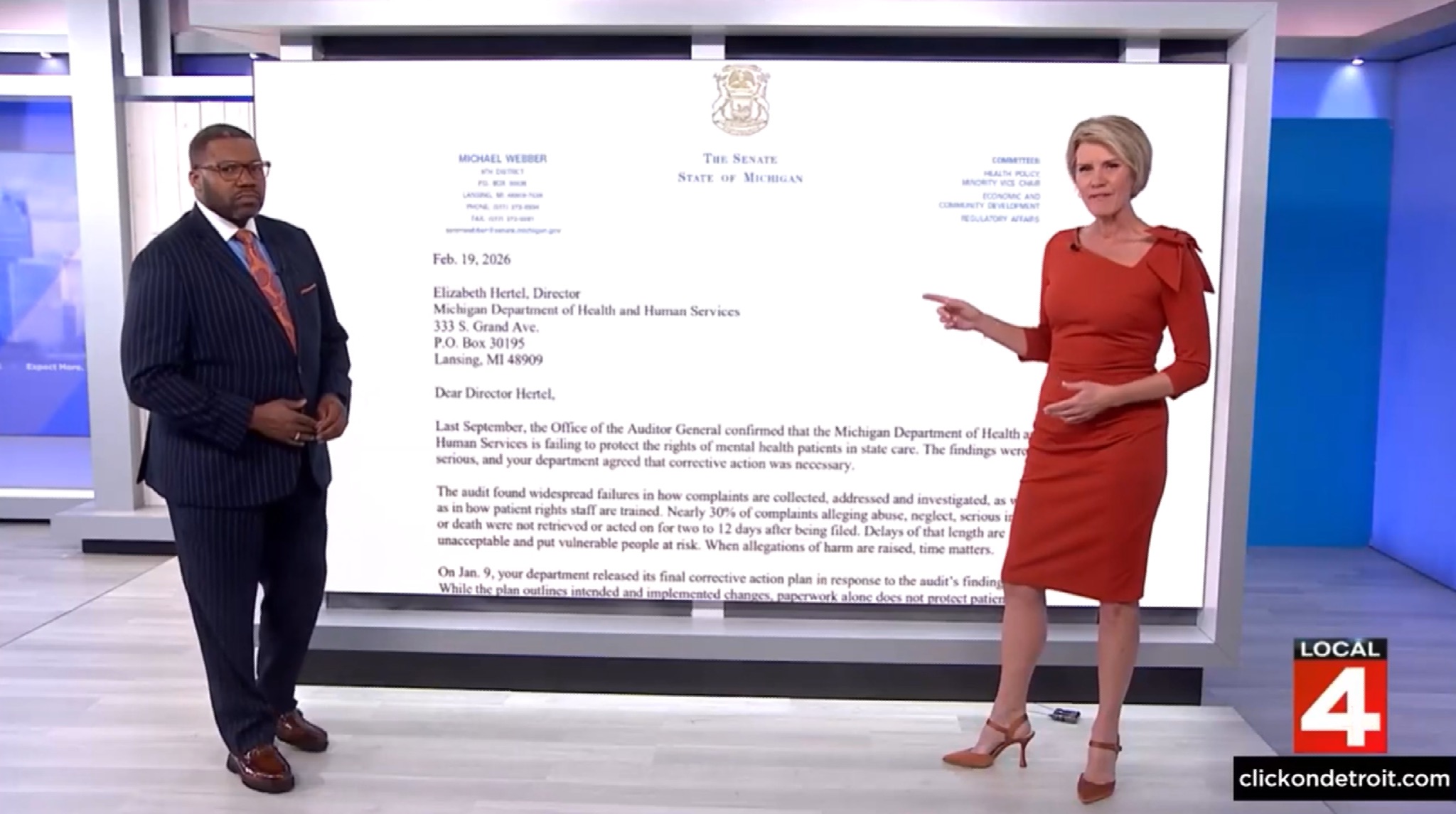
In the wake of the Office of the Auditor General’s audit of the state’s Office of Recipient Rights, I sent a letter to Michigan Department of Health and Human Services Director Elizabeth Hertel seeking clarification on how the department is complying with the audit’s recommendations after findings of significant negligence.
For months, my office met with patients and their families. Their stories were heartbreaking. I called for an audit, which confirmed the horrific stories and revealed a glaring lack of diligence within the Office of Recipient Rights. The department agreed that reforms were needed to better protect patients and was directed to complete a corrective action plan addressing the widespread failures.
On Jan. 9, the department released its final plan. While it outlined intended and implemented changes, it lacked evidence that improvements had occurred. I cannot simply trust the compliance plan, as the department has demonstrated a willingness to ignore current law and its own guidelines for protecting patient rights. The department responded to serious findings with essentially “we’ll do better,” but offered no evidence of real action. Paperwork alone does not equal progress. Changes of this magnitude require leadership from Director Hertel to ensure her agency is protecting patients in the state’s care.
The new plan included protocols that should have already been in place. We need more than just new guidelines — we need evidence they are being followed.
In the letter, I requested details on how the department will implement and verify compliance with the new procedures to protect patients. The letter was also shared with legislative leaders responsible for health policy and oversight.
This must be a collaborative effort. It’s important we do this right by working across the aisle and with our House colleagues. The state is failing these patients. We need everyone at the table to better protect kids and adults in the state’s care.
I recently spoke with Local 4 investigative reporter Karen Drew about why I sent this letter and the importance of ensuring MDHHS complies with the audit findings.
|
|
|
|
|
|
Webber welcomes Autism Alliance chief health officer to Capitol
|
|
|
|
|
|
|
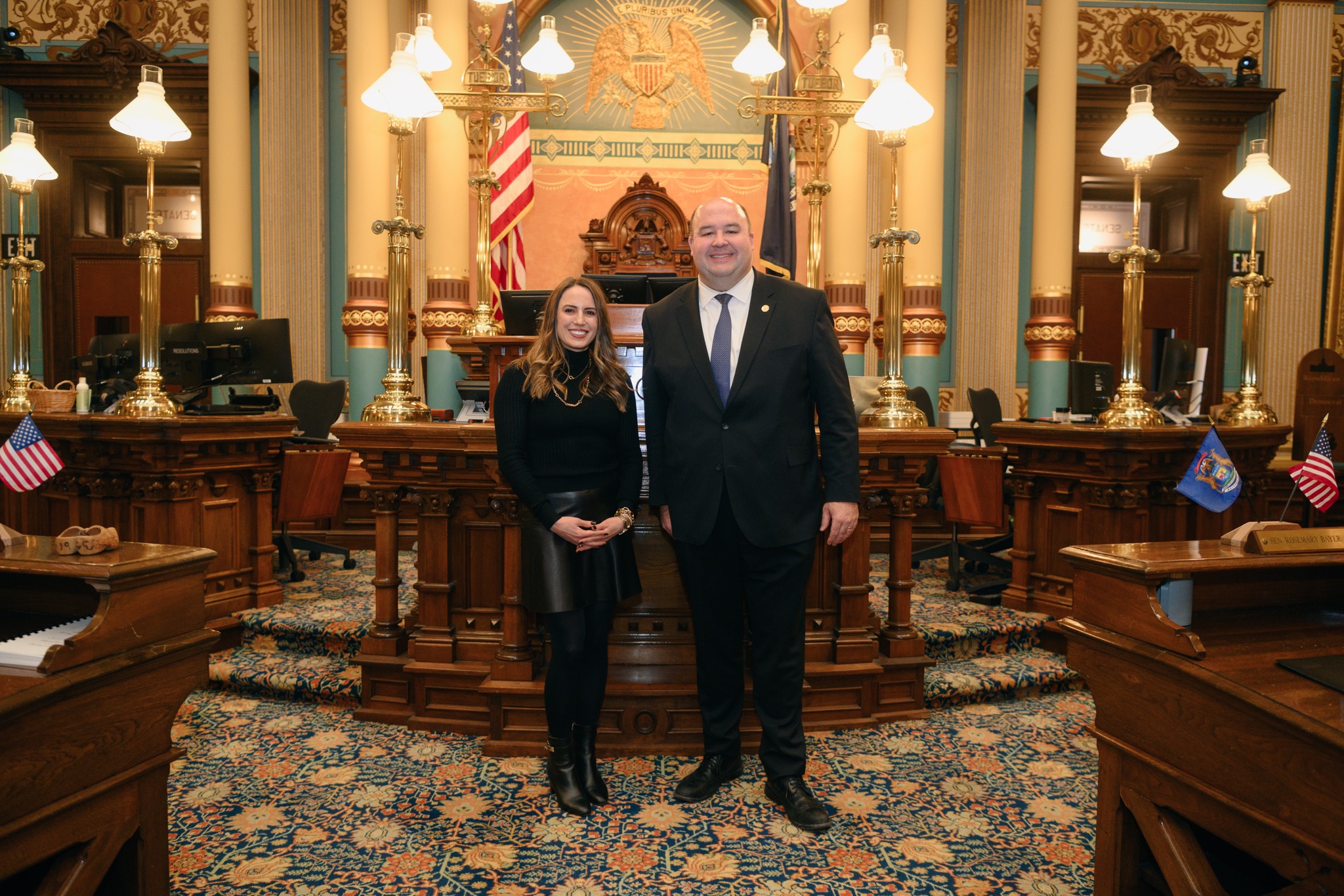
The governor delivered her State of the State address on Feb. 25 to a joint session of the Senate and House of Representatives. I hosted Dr. Nicole Hamp, a board-certified behavioral pediatrician and chief health officer for the Autism Alliance of Michigan, as my guest.
I currently serve as co-chair of the Autism Advocates Caucus and remain committed to improving access and removing barriers for individuals with autism who are seeking employment. I am actively working to restore the autism navigator program in the state budget, which is a critical service for many Michigan families.
|
|
|
|
|
|
Robocall legislation approved by Senate
|
|
|
|
|
|
|
Robocalls and telephone solicitations reached a six-year high late last year, rising to an average of 2.5 billion calls per month nationwide. Many of these calls are fake Internal Revenue Service, Social Security and other scams that attempt to bilk Michigan families and seniors out of their hard-earned savings.
Recognizing this growing risk, the Senate approved Senate Bills 351-355 in a unanimous vote. This legislation would enact the Telephone Solicitation Act, prohibit abusive or deceitful behavior and ban calls to any number on the Federal Trade Commission’s do-not-call registry. Caller ID blocking and the use of misleading numbers would also be banned. The attorney general would be empowered to bring civil action against anyone who violates the act.
Robocalls are more than an annoyance; they are used to target vulnerable populations. We must strengthen our state statutes and allow law enforcement to use their power to stop malicious solicitation. This bipartisan package would improve consumer protections and help prevent Michiganders from having their phones ring off the hook with scam calls.
The bills have now been transmitted to the House of Representatives and referred to the House Committee on Regulatory Reform for further consideration.
|
|
|
|
|
|
Governor reveals state budget proposal
|
|
|
|
|
|
|
Gov. Gretchen Whitmer recently presented her executive budget recommendation to the House and Senate appropriations committees. All told, the proposal includes $88.1 billion in state spending, a nearly $7 billion increase from the FY 2026 budget passed in the fall and a $34 billion increase from the year before she took office.
In order to fund this record level of spending, the governor proposes $800 million in new taxes on digital advertising, tobacco and vape products, and online gambling, as well as a $400 million withdrawal from the state’s rainy day fund.
Our state government has continued to spend more money even as families are struggling to afford groceries and other bills. Last year, the Legislature was able to come to a compromise that cut state spending, saving taxpayers money, while still investing over $2 billion annually into roads and infrastructure. Rather than committing to a new trend of responsible budgeting and spending, the governor has proposed more taxation to fund another increase and further balloon the size of state government.
As legislators, we have a responsibility to ensure that the government is living within its means. I am looking forward to working with my colleagues to craft a budget that makes critical investments to address the affordability crisis, our literacy crisis in schools, and support programs that Michigan families rely on.
|
|
|
|
|
|
Rochester Hills Government Youth Council visits Lansing
|
|
|
|
|
|
|
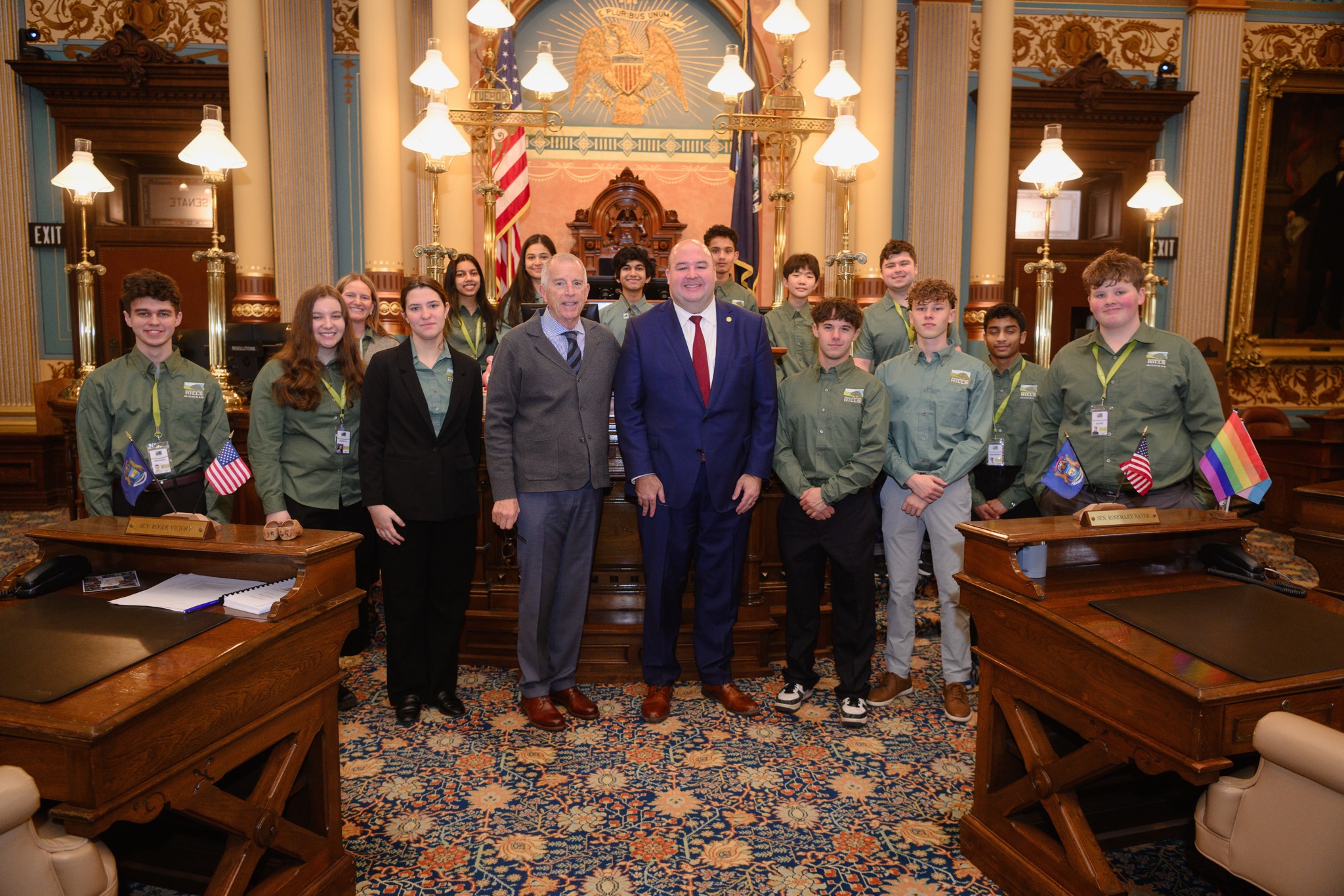
The Rochester Hills Government Youth Council is a group of civic-minded high school students from my district. They recently visited Lansing, where I had a chance to meet with them on the Senate floor. The council promotes youth involvement in local government and advises the city council and its committees on local issues.
Council members learned about state government and took a tour of the Capitol.
I was happy to host such an impressive group of students.
|
|
|
|
|
|
|
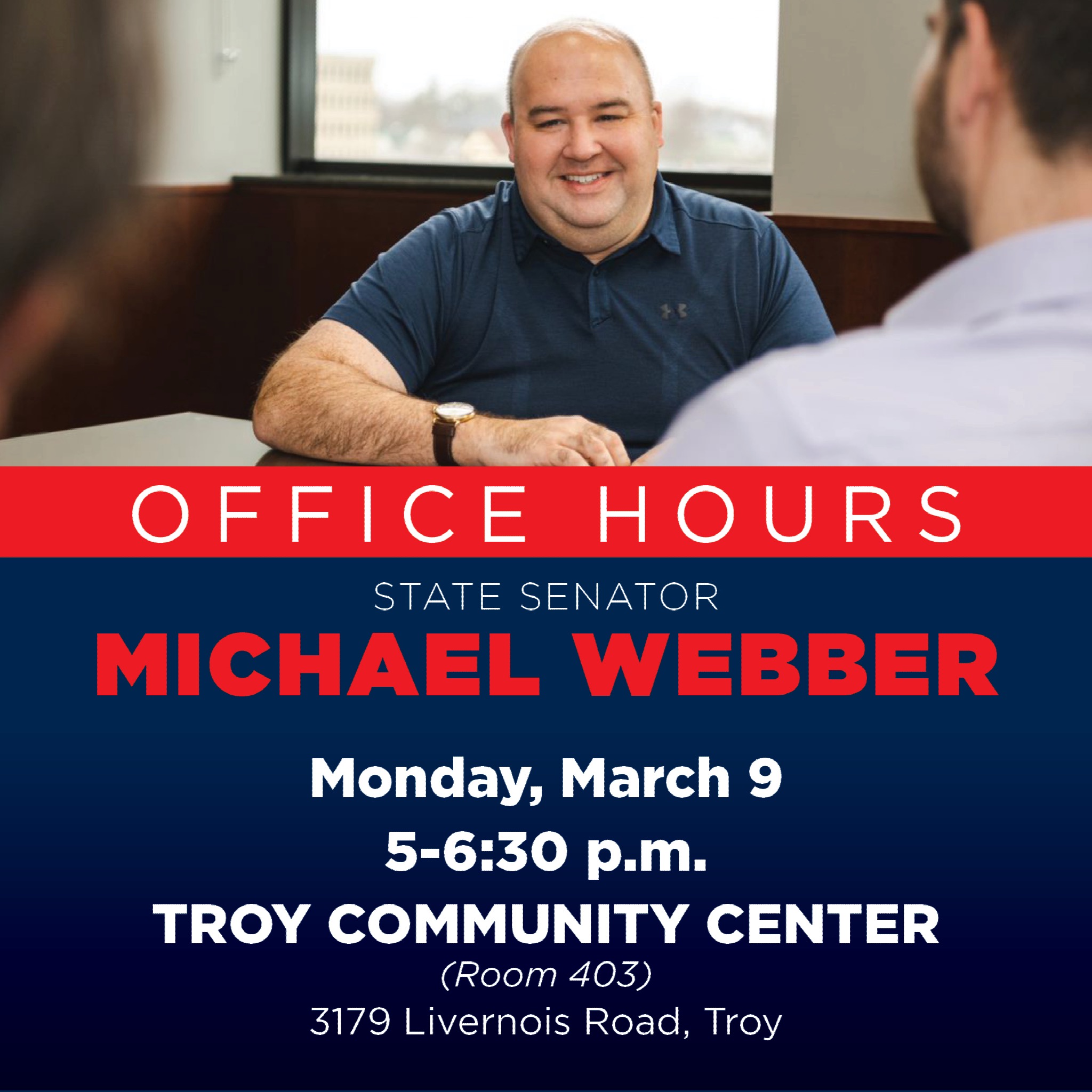
I will be holding office hours from 5-6:30 p.m. on Monday, March 9, at the Troy Community Center in Room 403.
No reservation is required to attend.
|
|
|
|
|
|
|
Senator Michael Webber
3200 Connie B. Binsfeld Office Building
P.O. Box 30036
Lansing, MI 48909-7536
Visit my website at: SenatorMichaelWebber.com
|
|
|
|
|
|