|
|
|
Dear Neighbors,
Welcome to this month’s edition of my e-newsletter. I will continue working with my colleagues on both sides of the aisle to tackle the tough issues that will lower the cost of living, help families get ahead and build a brighter future for all who call Michigan home.
As always, I welcome your feedback on issues facing Michigan or the Greater Rochester Area, Troy, Sterling Heights, Shelby Township and Utica communities. Constituent feedback is vital as I represent our communities in Lansing. If you are experiencing a problem with one of our state government agencies, my office is always available to assist with finding a solution. I respect your opinion and will always do my best to make myself available and accessible to you.
Please take a moment to visit my website, like my official Facebook page, send me an email or call my office at 517-373-0994. If you have any questions, concerns or opinions on what is happening, please do not hesitate to contact me.
Sincerely,
|
|
|
|
|
|
|
Michael Webber
State Senator
9th District
|
|
|
|
|
|
|
The Senate, House and governor have reached a budget framework agreement that would not increase taxes for Michigan working families, prohibit any withdrawals from the state’s “Rainy Day” fund, and rely on government efficiencies and cuts to wasteful spending to balance our state budget.
Appropriation subcommittee chairs from both chambers worked over the weekend on spending targets to implement the budget framework into budget bills.
Like families all over Michigan, state government must live within its means to be successful. I fully expect to review and vote on the bipartisan budget later this week. This timeframe will help school districts and municipalities better prepare their budgets for the coming year. The constitutional deadline to pass a balanced budget is Sept. 30.
|
|
|
|
|
|
Sen. Webber leads introduction of package to modernize funeral home regulation
|
|
|
|
|
|
|
The days following the death of a relative are among the toughest a family will face. Grieving relatives should be able to plan a funeral, burial or cremation using as streamlined a process as possible and should not have to worry whether their loved one’s remains are being prepared and cared for with dignity and respect.
Michigan is one of only a handful of states that prohibit joint ownership of a funeral home and a cemetery, known as an anti-combination law. Forty-five other states have updated their statutes to reflect families’ demand for more options and better continuity of care for their loved ones.
Additionally, our state does not require that the remains of loved ones be refrigerated before cremation or burial. It is hard to imagine, and many assume refrigeration is just standard practice, yet we have heard horror stories in the news about deceased individuals being left in ceilings or closets. Veterinarians are required to refrigerate pet remains, yet no such requirement exists for funeral homes.
To address these issues, I led the introduction of the Compassionate and Responsible, End-of-Life Modernization (CARE) Act in the Michigan Senate. The bipartisan package, consisting of Senate Bills 1060-1071, would eliminate the anti-combo prohibition, allowing funeral homes to also operate a crematory and cemetery, and require cemeteries and funeral homes to have and use refrigeration for all remains awaiting final disposition.
Michigan’s funeral homes provide critical and respectful services to families. By modernizing Michigan’s laws to keep up with the realities of today’s world, we can provide comfort and peace of mind to families grieving a loved one while helping funeral directors do their jobs in the most efficient and reverent manner possible.
|
|
|
|
|
|
Dutton Farm launches new facility in Macomb County
|
|
|
|
|
|
|
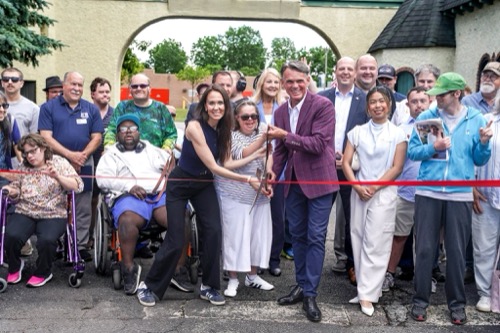
Dutton Farm has served Michigan adults with disabilities since 2010, providing adult education, workforce development, community involvement and many other services. When a local parent saw the dearth of programs for those with disabilities after they turn 18, she took action. Dutton Farm now serves thousands of adults across Southeast Michigan and is one of our state’s leading nonprofit organizations.
I was proud to join Dutton Farm leadership to open the organization’s new home in Macomb County. The facility is eight times larger than its existing complex and will allow the organization to serve many more people. Programs including culinary training, arts, animal care, job training and more will be offered.
As a Dutton Farm board member and co-chair of the Autism Advocates Caucus in the Michigan Legislature, I know how important lifelong support for adults with disabilities is. The leadership at Dutton has built something truly special, and our community is better because of their hard work and dedication.
|
|
|
|
|
|
OPC and BAPS raise money for charity
|
|
|
|
|
|
|
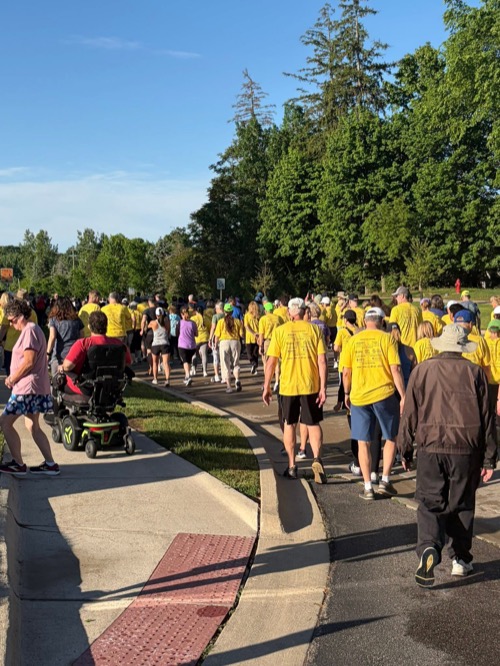
I kicked off the month by joining the Rochester Hills OPC’s Annual 5K Run/Walk for Meals on Wheels and the BAPS Charities Run for Heat 4 Heroes. The events drew hundreds of participants from across the district and raised tens of thousands of dollars for the nonprofit organizations. Meals on Wheels provides nutritious meals for our community’s seniors, while Sterling Heights-based Heat 4 Heroes provides free HVAC services to veterans, firefighters and police officers.
It was great to see so many neighbors out getting exercise on a pair of beautiful days in support of two great causes. I spoke with numerous residents about the importance of the services provided by the OPC and BAPS charities and the challenges our seniors and veterans face today.
|
|
|
|
|
|
Mobile home park modernization bill passed
|
|
|
|
|
|
|
The Michigan Senate recently approved legislation as part of a bipartisan six-bill package to update the state’s mobile home laws.
These much-needed reforms would improve oversight of more than 1,200 mobile home communities throughout Michigan and expand protections for nearly 475,000 residents.
Senate Bill 938 would create an income tax credit for mobile home park owners who sell their park to the park’s residents. The bill would create a nonrefundable tax credit of up to 15% of the purchase price if the owner sold the park to its residents.
SBs 934-937 and 939 would:
|
|
|
|
|
|
|
| ▪ |
Require annual mobile home park inspections and create new rules regarding installers.
|
| ▪ |
Create a mobile home park owner database. |
| ▪ |
Enable the state to enact rules regarding water and wastewater systems within parks.
|
| ▪ |
Create a more comprehensive licensing application process.
|
| ▪ |
Update requirements for lease and rental agreements, as well as the list of practices by mobile home park owners that are unfair or deceptive.
|
| ▪ |
Create several funds designed to assist park owners and residents.
|
| ▪ |
Provide more options for residents being evicted from their park.
|
| ▪ |
Establish penalties for unlicensed park ownership.
|
| ▪ |
Outline the Michigan State Housing Development Authority’s role in administering a new Resident Ownership Revolving Fund.
|
|
|
|
|
|
|
|
|
Manufactured homes, often called mobile homes, differ from traditional homes in that they are constructed and assembled in a factory before being transported to a home site. This allows them to be built for significantly less money than a traditional home. While the average cost of a new house in Michigan is more than $350,000, the average price of a new manufactured home is less than $150,000.
|
|
|
|
|
|
Explore Michigan’s state parks and visitor centers
|
|
|
|
|
|
|
This summer, purchase a Recreation Passport and visit one of Michigan’s 103 state parks and recreation areas to enjoy camping, swimming, fishing, hiking, biking, boating and more.
Michigan also has 11 visitor centers located at state parks and fish hatcheries that offer educational exhibits and access to nearby trails. Each center has professional interpreters who lead nature-focused programs.
During the summer months, Explorer Guides lead outdoor education programs at parks and recreation areas throughout the state. Click here for an interactive map of parks offering Explorer Guide programs, along with weekly schedules for each location.
Many state parks and campgrounds have been updated to improve accessibility. Facilities may include modern restroom buildings, accessible playgrounds, fishing piers, beaches, track chairs and more. Visitors can also take virtual tours before visiting a location.
Recreation Passports can be purchased through the secretary of state or at park entrances.
|
|
|
|
|
|
|
Senator Michael Webber
3200 Connie B. Binsfeld Office Building
P.O. Box 30036
Lansing, MI 48909-7536
Visit my website at: SenatorMichaelWebber.com
|
|
|
|
|
|